0
Prime Minister Tarique Rahman stated that beneficiaries of fascism are still active in various sectors of the state, politics, and administration. He said that recently, a syndicate has been attempting to destabilize the country’s fuel and power sectors.
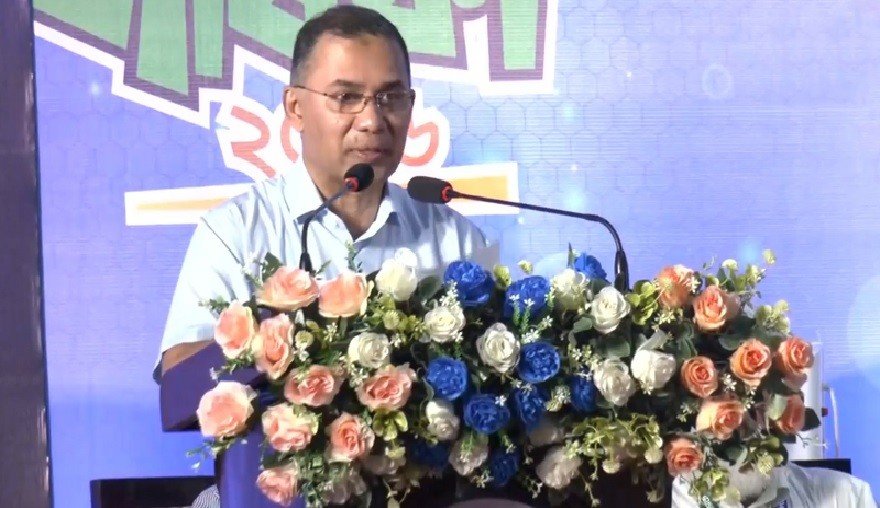
The Prime Minister made these remarks on Saturday (August 8) at a doctors’ rally organized in the capital on the occasion of the 37th founding anniversary of the Doctors’ Association of Bangladesh (DAB).
Highlighting the current situation of the country’s energy sector, Tarique Rahman said that the government does not deny the public’s suffering with electricity and gas. In the past, various unplanned projects and policies were adopted in the energy sector. The country, its people, and the current government are now paying the price for these policies, which were designed to benefit specific quarters.
He stated that the government has begun working to overcome the energy crisis. Initiatives are being taken to bring the energy sector under proper planning by re-evaluating unplanned projects. The government plans to gradually extricate the country from the overall energy crisis, including gas and petrol.
The Prime Minister said that the government has started working with realistic plans to make the country’s healthcare system modern, self-sufficient, and people-friendly. The government is moving towards allocating 5% of the GDP to the health sector. However, to ensure the benefits of this funding reach the public, all government and private doctors must work collaboratively.
Emphasizing prevention over treatment, he stated that one of the government’s health policy goals is ‘prevention is better than cure.’ If awareness about the causes of diseases, prevention, and healthy living can be created among people from the outset, the incidence of many diseases can be reduced.
To this end, the Prime Minister also announced that the government has undertaken initiatives to recruit another one lakh health workers. These health workers will assist the general public with primary healthcare, disease prevention, and health awareness. He urged doctors to lead in providing appropriate training to these health workers.
Tarique Rahman informed that efforts are underway to launch e-health as soon as possible. Concurrently, a decision has been made to upgrade every Upazila Health Complex in the country to a 101-bed hospital. However, merely constructing infrastructure or increasing hospital beds will not achieve the desired development in the health sector. Doctors must work with a service-oriented mindset, professional dedication, and responsibility.
Regarding various demands raised by doctors, the Prime Minister mentioned that requests have been made for the swift recruitment of five thousand doctors through special BCS exams, increasing the age limit for doctors in government service from 32 to 34 years, raising the retirement age from 61 to 65 years, and enacting a timely healthcare protection law for the safety of both doctors and patients.
He also noted demands for special allowances and incentives for doctors working in Upazila and remote areas, a fair salary structure for doctors employed in the private sector, and the establishment of specialized hospitals at divisional, district, and Upazila levels.
The Prime Minister stated that these demands are not entirely unreasonable. However, when the government took office, it inherited a weak economy, a divided administration, and a fragile education and healthcare system. The government is working to turn the country around from that situation.
Regarding the involvement of doctors in politics, Tarique Rahman said that in a democratic state, political decisions affect almost all aspects of people’s lives. Therefore, it is not unusual for various professionals to be politically aware or organized. However, the crucial point is that political involvement should not hinder the performance of professional duties.
He emphasized that the primary responsibility of doctors is to ensure healthcare for the people. The citizens of the country expect a more responsible, humane, and professionally dedicated role from doctors.
The Prime Minister urged everyone to work together so that people do not have to go abroad for advanced medical treatment. He expressed his determination to build a doctor-friendly Bangladesh by ensuring quality healthcare for every individual through the combined efforts of government and private doctors.